Landscaping
Coastal Garden Guide: Plants That Thrive in Salt Spray and Wind
A garden within earshot of the waves plays by different rules. The light is brighter, the air is rarely still, and every gust carries a fine film of salt that settles on leaves, fences and soil. Plants that flourish three streets inland sulk here, and the ones that survive are seldom the ones you would have chosen from a catalogue picture. That is no reason to settle for gravel and a wind-bent shrub. It is a reason to pick with care, and to build shelter before you build borders.
What follows is a working approach for seaside plots: how salt and wind actually damage plants, which species take the punishment, how to plant a windbreak that holds, and how to coax good growth out of thin, salty ground.
What Salt and Wind Actually Do
Salt spray is the obvious problem and the easiest to underestimate. Wind-driven droplets land on foliage and pull moisture out through the leaf surface, so leaves scorch and brown on the windward side of a plant while the sheltered side stays green. Soft new growth in spring is the most vulnerable of all, which is why so many coastal gardens look promising in March and ragged by June.
Salt also accumulates in the top few centimetres of soil, particularly on plots that are rarely watered, and it makes it harder for roots to draw up water even when the ground is damp. Wind does the rest: it prunes shoot tips, shreds flowers, dries buds and lifts bare sandy soil away in sheets. And under all of that sits the soil itself, often thin, fast-draining and low in organic matter, sometimes alkaline where shell fragments have been worked in.
The practical lesson is simple. Choose plants that expect this treatment, keep the soil covered, and give everything a chance to establish behind some form of shelter.
Plants That Take Salt Spray
Walk the first row of dunes or the strip behind a sea wall and you will see the pattern: leathery or glossy leaves, grey or silver foliage, small leaves, tough cuticles, low sprawling growth. Those are the plants that cope. You will not find many broad, thin, soft leaves, and you will not find many plants that insist on rich soil.
Evergreen structure
For the frame of the garden, use dense evergreens that tolerate salt and wind. Griselinia littoralis, escallonia, olearia, Elaeagnus and Pittosporum tobira all earn their place, as does the holm oak where you need something taller and slower. Tamarisk and sea buckthorn are the pioneers for the roughest ground, useful for holding soil while softer planting gets going. Rosemary and phillyrea bridge the gap between hedging and border.
Perennials, subshrubs and bulbs
Sea thrift, sea kale, Eryngium, lavender, santolina, cistus, thyme and sage are the backbone of a dry, bright border, all of them happier in lean ground than in a rich one. Add Sedum, achillea, crocosmia, Erigeron and Rosa rugosa for long, unfussy colour. In a warm, sheltered pocket, agapanthus and nerine will manage where they would fail out in the open.
Grasses and ground cover
Blue fescue, Calamagrostis, Carex and Stipa move with the wind instead of fighting it, and they cover soil quickly. Use them in swathes at the front of a border, where their roots will bind light sand and stop it shifting in winter gales.
Windbreaks: Layer, Don't Wall
A solid fence or a garden wall seems the logical answer and performs badly. Wind hits it, climbs, and drops into the garden as turbulence on the other side, so plants just behind the barrier get battered from above. A permeable barrier that lets perhaps half the wind through filters it and slows it. Hedges do this naturally. So do woven hurdles and slatted screens.
The strongest solution is a layered hedge of mixed species, planted in staggered rows, with lower plants in front. Aim for variety so that a pest or a bad winter does not take out the whole shelter, and let the hedge grow to a decent height rather than shaving it flat every year. The protected band downwind extends several times the height of the hedge, so a 2 m hedge shelters a surprising amount of border.
- Plant in autumn, while the soil is warm and rain is on the way, so roots establish before the spring gales.
- Space plants at their final spread rather than crowding them; a dense hedge is made by pruning, not by planting everything on top of everything else.
- Water through the first two summers, even if the plants are drought-tolerant once established.
- Mulch immediately after planting and keep the mulch topped up; bare soil under a young hedge dries out fast.
- Prune lightly and often in the first years to thicken growth at the base, and stop feeding with high-nitrogen fertiliser, which produces soft, sappy tips that salt wind will shred.
While the hedge fills in, use temporary shelter: a woven hurdle, a net screen or a stack of pots and crates. It is not elegant, and it is the difference between a plant that survives its first winter and one that does not.
Making Sandy, Salty Ground Work
Do not try to rebuild the whole plot in one season. Improve planting pockets instead. Fork in plenty of compost, well-rotted manure or leafmould when you plant, and mulch annually with a 5 to 8 cm layer of organic matter, kept clear of stems. This holds moisture, feeds soil life and slowly builds a darker, more workable topsoil. Where the ground is pure sand over stone, a raised bed for the plants you care most about is money well spent.
Water deeply and less often, ideally with drip lines rather than sprinklers. Overhead watering in salt-laden wind does more harm than good, but a deliberate rinse of foliage with fresh water after a severe gale will help wash the salt off. A gravel mulch on top of the organic layer reduces evaporation and stops the wind from lifting bare soil. And go easy on fertiliser: rich, soft growth is exactly what coastal weather destroys.
A Planting Plan by Zone
Think of the plot as three bands running back from the sea, and plant each with species suited to what it will face.
- Front line — thrift, sea kale, Eryngium, rosemary, tamarisk, sea buckthorn, fescue. Expect losses; plant generously and let the survivors define the shape.
- Middle ground — lavender, cistus, santolina, achillea, crocosmia, grasses, topped by escallonia or Pittosporum tobira at the boundary.
- Sheltered pocket — behind the hedge or a building, use the space for the plants you actually love: roses, agapanthus, nerine, softer perennials. This is where you can afford to fuss.
Seasonal Jobs That Matter More Than the Rest
Coastal gardening rewards a light touch. The two jobs to protect are mulching in autumn, which insulates roots from salt-laden rain and wind chill, and a freshwater rinse of evergreens in late winter after the storms. Prune hedges after the worst of the spring wind, not before, and leave the sheared tops on the ground for a day or two as a rough mulch. Check stakes and ties in February, before the equinox gales arrive. Cut back battered perennials in early spring rather than tidying them away in autumn, so the old stems shelter the crown through the coldest weeks.
Start With One Bed and One Hedge
Pick a single patch, plant a short run of mixed evergreens as a test hedge, and keep the first two years modest: a few tough perennials, a generous mulch, a watering can and a notebook. Walk the plot after a gale and note which side of each plant burned, then plant the next bed accordingly. Coastal gardens are not built in a season; they are negotiated over several, with the wind and the salt, until the planting that remains is the planting that belongs there.
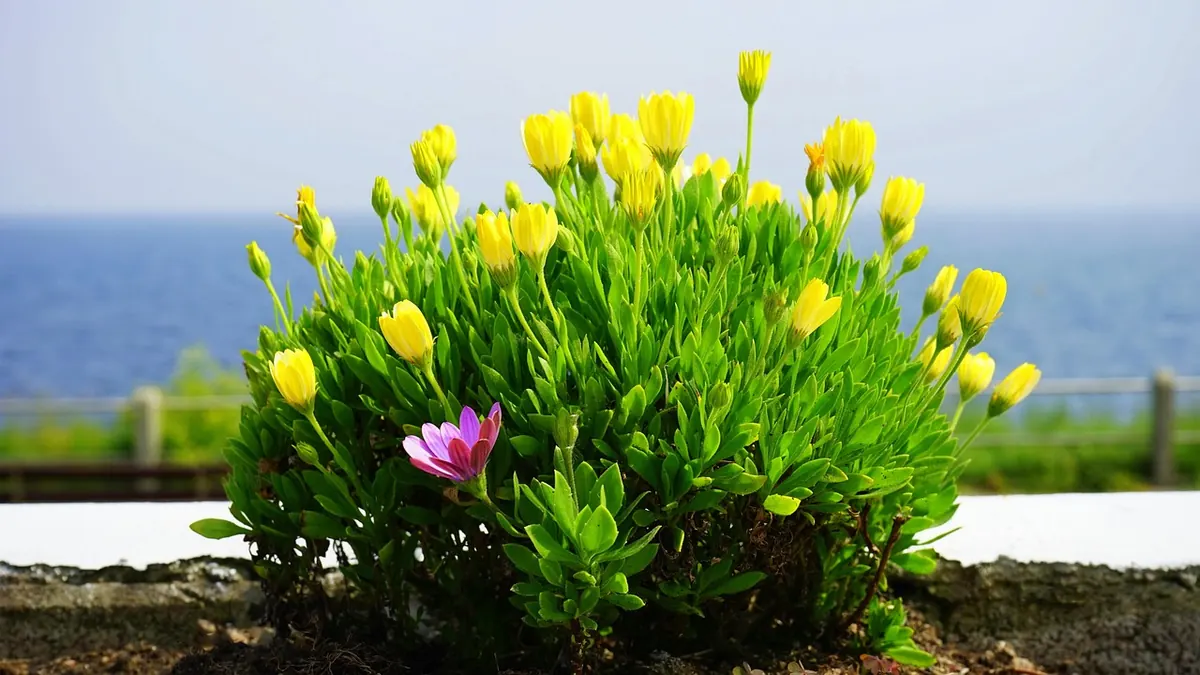
Photo: VariousPhotography / Pixabay
Related Articles