Plant Care
7 Watering Mistakes That Are Killing Your Container Plants
Containers fail faster than garden beds do. A plant in the ground can push roots deeper and sideways when the top inch dries out. A plant in a pot has only the volume of that pot to live in, and only the water you put there. That is why the same watering mistakes that merely slow a border plant down can kill a container plant in a fortnight.
Most of what goes wrong with pots is water-related, which is encouraging, because water is entirely in your hands. Here are the seven habits that do the most damage, and the specific fixes for each.
1. Watering by the calendar instead of by the soil
Tuesday and Friday, every pot, every week. It feels organised. It is also the single most common reason container plants rot or sulk.
Plants do not drink on a schedule. A pot in full sun in July can go through its water in two days; the same pot in October may take ten. A plant that has just been repotted into fresh mix drinks differently from one that has filled its pot with roots. Even two identical pots side by side dry at different rates if one catches more wind.
So before you pick up the can, put a finger in the soil. For most pots, two to three centimetres is enough; for a large tub, go deeper or use the weight test described below. Water only when that layer feels dry to the touch and the soil just beneath is barely damp. If it's still cool and moist an inch down, walk away.
2. Overwatering: the mistake that looks like care
Overwatering rarely looks like drowning. It usually looks like a small daily kindness — a splash every morning so the compost never quite dries. The trouble is that roots need air as much as water. A mix that stays permanently saturated loses its air pockets, and the roots begin to suffocate and rot. The plant then wilts, which is exactly what a thirsty plant does, so the watering continues and the damage deepens.
Note that overwatering is about frequency and drainage, not volume. Flooding a pot until water runs out of the bottom and then letting it dry back is not overwatering. Keeping it uniformly soggy is.
Signs you are more likely over- than under-watering
- Lower leaves turning yellow and dropping while the top growth looks limp.
- Wilting that does not improve after watering — or improves for a day, then returns.
- Soil that is still damp a week after you last watered.
- Fungus gnats drifting up when you disturb the surface.
- A sour smell, green algae or a film of moss on the compost.
- Stems that feel soft or turn dark at the base.
If two or three of those apply, stop watering and let the pot dry back properly. Check the drainage before you do anything else.
3. Pots with no way out
Water has to leave. A pot without a drainage hole, a full saucer, or a decorative outer pot that collects the overflow all create the same problem: a permanent puddle around the roots, even if the surface looks fine.
A few fixes worth knowing. If you use a cachepot, either take the inner pot out to water and let it drain before returning it, or line the outer pot with a wick and tip out anything that collects. Empty saucers twenty or thirty minutes after watering rather than leaving them topped up as a reservoir. Raise pots on feet or tiles so they are not sitting in a puddle on paving.
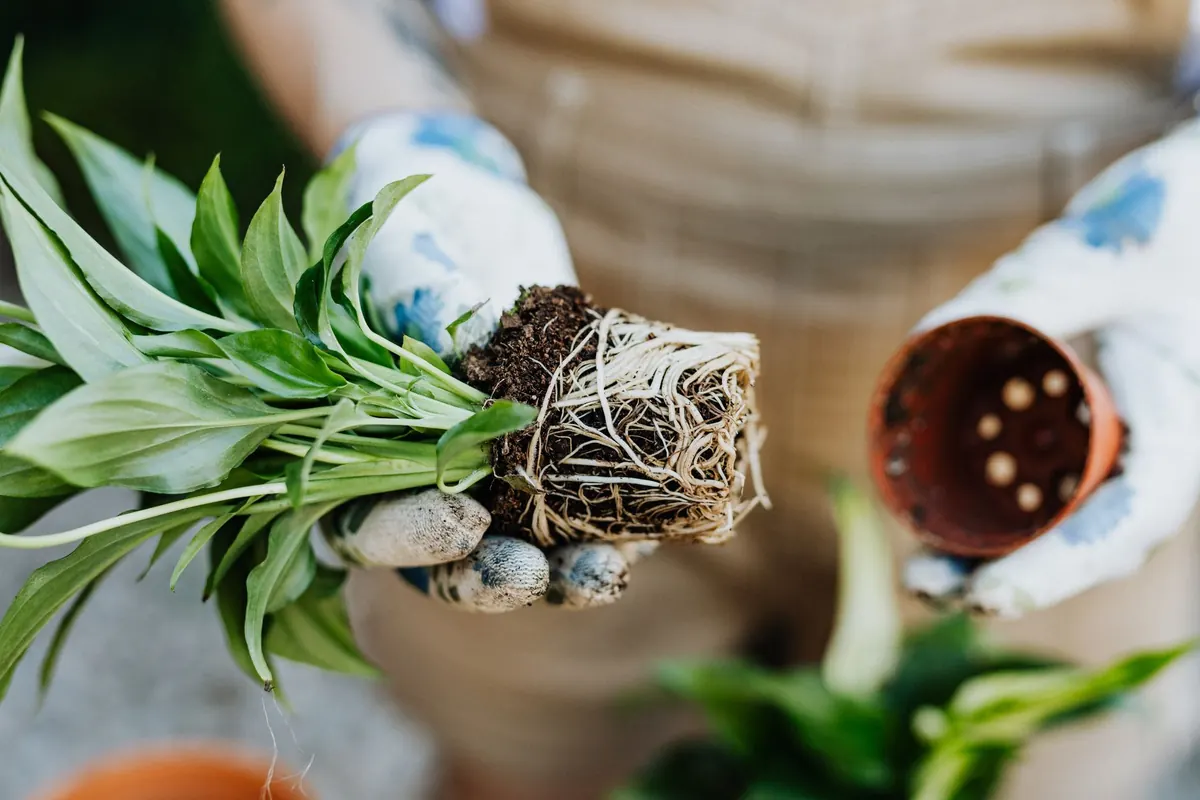
Skip the old advice about putting gravel or broken crocks in the bottom of a pot "for drainage". It raises the water table inside the pot and makes things wetter, not drier. What actually matters is a hole, free-draining potting mix rather than garden soil, and not cramming the pot so full of roots that there is barely any mix left. Plants that have been in the same pot for years often sit in compacted, exhausted compost that holds water like a sponge; repotting into fresh mix solves more watering problems than any gadget.
4. The quick sprinkle
A brief pass with the watering can wets the surface and nothing else. Do it daily and you train roots to stay in the top few centimetres, exactly where the soil dries fastest and gets hottest. The plant becomes more fragile, not less.
There is a second problem. Peat-based and coir-based mixes can become water-repellent when they dry out completely. Water hits the surface, runs down the gap between the soil and the pot wall, and exits through the drainage hole without ever soaking in. You think you have watered; the rootball is still bone dry.
When a pot has gone very dry, water it in two passes:
- Give it a first, gentle watering and stop when it starts to run out of the bottom.
- Wait ten to fifteen minutes while the mix rehydrates and softens.
- Water again, more slowly, until it runs freely. Then empty the saucer.
For a badly dried-out small pot, standing it in a basin of water for twenty minutes works better than anything poured from above. A layer of mulch on the surface also slows evaporation and stops the top layer drying into a crust.
5. Watering at the wrong time of day
Morning is the best default. The plant has water available through the heat of the day, and any splashes on the leaves dry off quickly.
Watering late in the evening is not fatal, but in cool weather it leaves foliage and compost damp overnight, which favours fungal problems. Watering at noon on a hot day is not the disaster older gardening books warn about, but a lot of it evaporates before it reaches the roots and the pot heats up fast. If a plant is wilting badly at two in the afternoon, move it into shade and water it rather than waiting.
One habit worth breaking: watering the whole plant like a shower. Aim at the soil. Wet leaves invite trouble, and the roots are not up there.
6. Treating every pot the same
A row of pots can look uniform and behave completely differently. Watering them all with the same amount on the same day guarantees that some are too wet and others too dry.
The variables that matter most are pot size and material, plant size, compost type, and position. A small terracotta pot in full sun may need water twice a day in a heatwave; a large plastic pot in shade might go a week. A root-bound plant drinks far faster than one with room to spare. Dark plastic in strong sun gets hot enough to stress roots. Grouping pots together, and shading the pots rather than just the leaves, evens things out considerably.
7. Misreading the signs
Wilting does not always mean thirst. It can mean the roots are rotted, or that the plant is simply losing water faster than it can take it up at midday. Watering a rotting plant makes it worse.
Before you water, gather evidence rather than reacting to a droopy leaf:
- Finger test. Push a finger into the mix to the second knuckle. Dry and crumbly means water; cool and clinging means wait.
- Weight. Lift the pot. A well-watered pot is heavy; a dry one is surprisingly light. Once you know both weights, this is the quickest test there is.
- Chopstick or skewer. Push a wooden stick deep into the pot, leave it a few minutes, and check whether it comes out damp.
- Look at the whole plant. Crisp, brown leaf edges and a light pot point to thirst. Yellowing, soft stems and a heavy, sour-smelling pot point to the opposite.
Judge the soil, not the leaves. The leaves tell you something is wrong; the soil tells you which way to correct it.
Inexpensive moisture meters are handy for a rough reading, but treat them as a second opinion — they read differently in different mixes and drift over time.
A watering routine that actually works
None of this needs to be complicated. Check before you water, water properly when you do, and let the top layer dry between rounds. In practice: give the pot a thorough soak until water runs from the base, empty the saucer, and then leave it alone until the surface is dry to the touch. In hot, windy or fast-growing spells, check twice a day; in cool or dull weather, check every few days and expect to water less.
Watch the pots that dry fastest — small ones, terracotta, anything in full sun — and adjust those separately. If you are going away, move pots into shade and group them together to slow evaporation; a few days of shade does far less harm than a week of sitting in a saucer of stale water.
Get the water right and most other container problems shrink on their own. Roots stay healthy, leaves stop yellowing, and the plant has enough reserves to shrug off the odd missed day.
Photo: Antranias / Pixabay
Related Articles